It is the third most widely used plastic in the world.
Its industrial production began 90 years ago this year.
An indoor swimming pool, a haulier tarping his truck, a building under renovation kept protected, floats out on the open sea, the inflatable finish line of a marathon, or those ever-so-inflated imposing structures for family leisure: it has to withstand UV, bad weather and impacts; deformation, corrosion and oxidation — this is PVC.
Polyvinyl chloride belongs to the family of thermoplastic polymers. It was discovered by accident in 1835 by the French physicist Victor Regnault, then patented by the German Friedrich Klatte, right through to the unusual uses seen today.
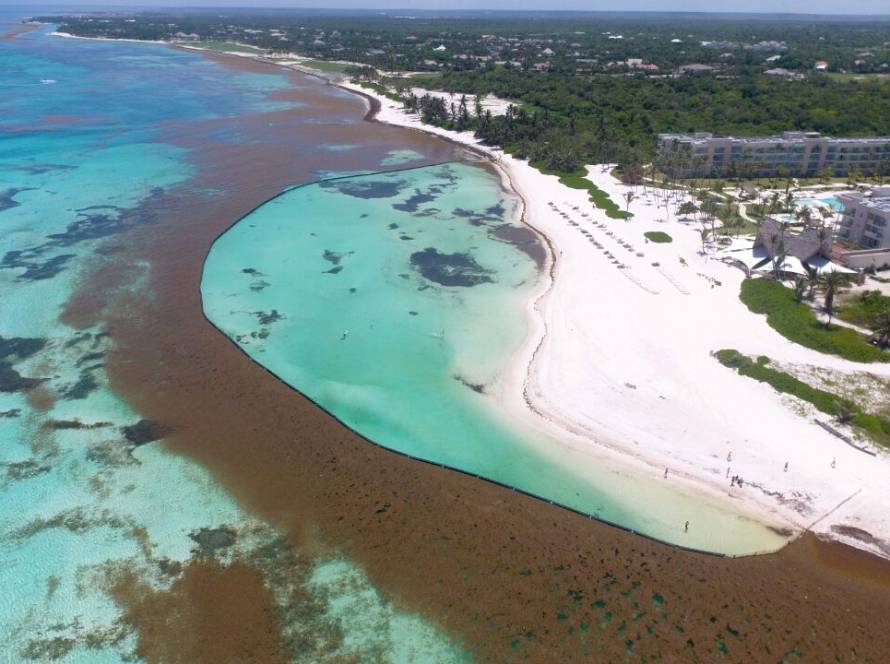
Geodesic domes made of PVC serve as original accommodation, and musicians have created instruments from pipes made of this same material, because from toothpicks to XXL tarpaulins, this particular plastic is a durable component that is easy to work with. But know-how remains a mark of quality when it comes to PVC. At FiletNova, we brought it all the way into the Seine for the Paris 2024 Olympic Games and into the sargassum-algae-polluted waters of Mexico.